
What You’ll Learn
What an earnest money deposit is
The difference between an earnest money deposit and a down payment
How to get your earnest money deposit back
What is earnest money?
When you’re ready to make an offer on a home, you may consider giving the seller a cash deposit to show them you’re serious about going through with the purchase. This is called earnest money. In return, the seller will typically stop showing their property to other interested buyers. While earnest money isn’t legally required, most sellers will expect a deposit before they agree to take their house off the market. Earnest money can be an essential tool for buyers because it can help your offer stand out, especially in more competitive markets. But make sure you understand the fine print on earnest money—there are a few things you’ll want to keep in mind before writing any checks.
Who benefits from earnest money?
The reason why earnest money is a fairly standard part of any real estate transaction is because the seller assumes a certain amount of risk by taking their home off the market. If your purchase agreement falls through for some reason, the seller has wasted time and potentially other offers from interested parties. An earnest money deposit is meant to offset that risk. It’s also an effective way to prevent less serious buyers from making offers on multiple homes and retracting them after they make their decision.
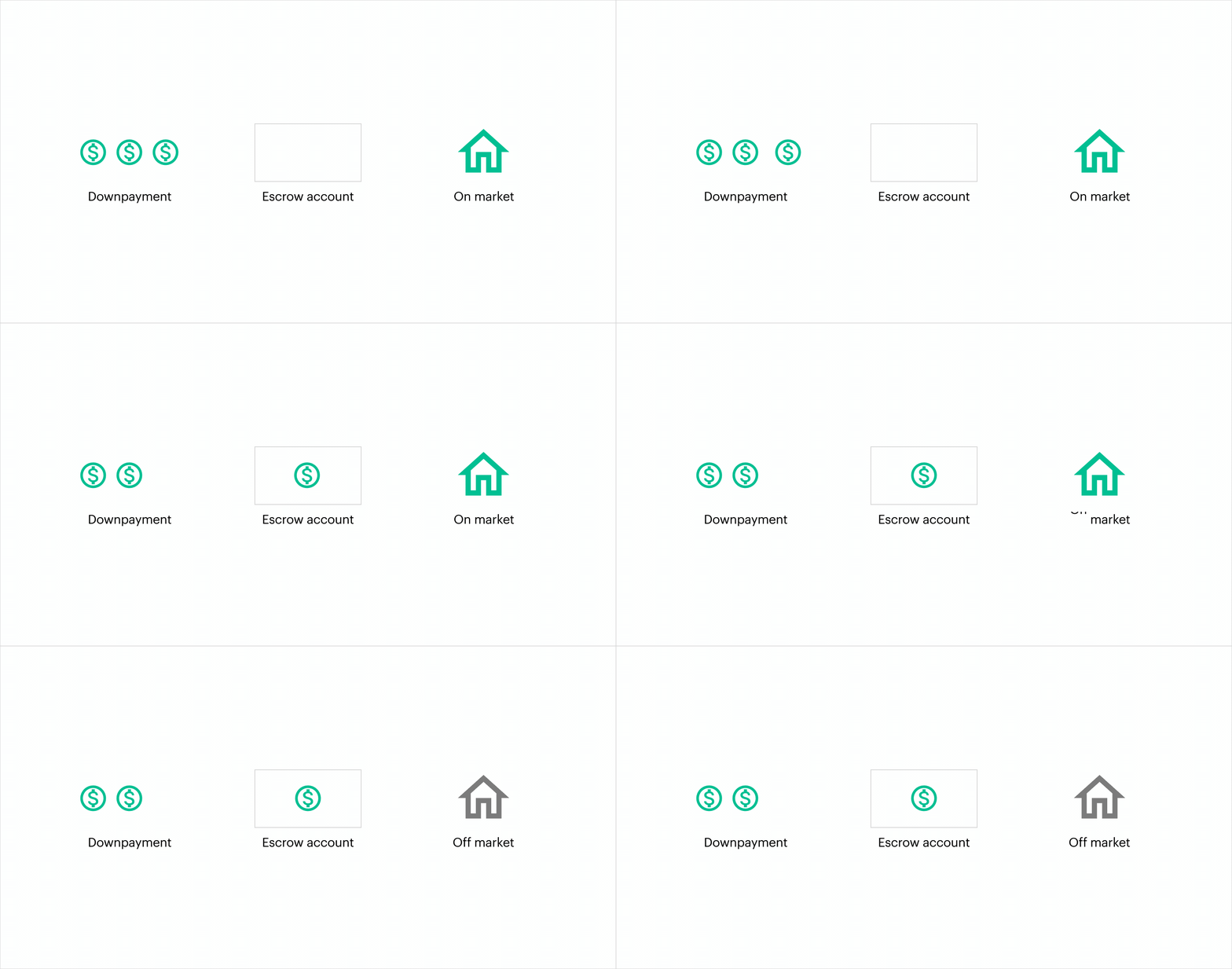
During the course of closing on a home, earnest money acts as a form of insurance for the seller. If you breach the terms of the contract and decide to walk away from the sale without a valid reason, the seller may get to keep the deposit to compensate for their loss. If everything goes according to plan and the home sale goes through without a hitch, then the earnest money deposit will be applied toward your down payment and closing costs. Be sure to ask your real estate agent about the specific terms around your earnest money deposit.
Earnest money vs down payment
While an earnest money deposit and down payment are both initial costs of buying a home, they each serve different purposes in the overall transaction.
When you buy a home, the down payment goes toward the total amount of your home. Typically, a down payment ranges between 3% and 20% of the home's purchase price. Down payments help determine your loan-to-value ratio—a figure that lenders use to assess the risk of your loan. Bigger down payments can improve your loan-to-value ratio and make it less likely that lenders will attach additional costs to your loan. Smaller down payments can weaken your loan-to-value ratio and make it more likely that lenders will attach additional fees that mitigate their risk. For example, private mortgage insurance (PMI) is required by lenders if you put down less than 20%.
An earnest money deposit, on the other hand, is meant to reassure the seller that you have intent to buy. The deposit money is usually kept in an escrow account during the course of the transaction and then eventually applied to the down payment or closing costs when the sale goes through.
How much earnest money do I need?
There's no hard-and-fast rule for how much an earnest money deposit should be. However, between 1% and 2% of a home's purchase price is typical. The amount will vary depending on how active the real estate market is, as well as what is customary for that market.
Ultimately, the amount that you put toward this deposit depends on two things: your comfort level and the local real estate market. In competitive markets, buyers may use earnest money as a negotiating tool, putting down a bigger deposit as a way to make their offer stand out from the crowd.
How does earnest money work?
The earnest money deposit will usually come into play when you’re writing up an offer to buy a home. Typically, a section of the purchase contract will include details about the exchange of earnest money, as well as the conditions, or contingencies, specifying who gets that money if the contract is broken.
Once your offer is submitted and these contract terms are agreed upon by both parties, you’ll give the earnest money check to your real estate agent. They will make sure that it gets deposited into the correct escrow account and held there throughout closing.
Every lender may have different requirements when it comes to escrow deposits, so it’s crucial to review those policies carefully. For instance, Better Mortgage requires a copy of the canceled check (front and back, showing it has cleared your account) to verify that the deposit is in an escrow account.
Can you get earnest money back?
If you break the terms of your agreement, the seller will probably get to keep your earnest money deposit. However, if legitimate issues arise and cause you to rescind your offer, you might be able to get your earnest money back. For example, getting cold feet does not typically constitute a valid excuse for backing out of a deal. But if a home fails to pass inspection and you decide not to move forward with purchase because of that, it’s a different story.
Most contracts contain contingencies that protect buyers and allow them to cancel the sale without a penalty. These contingencies may include uninsurable properties, pest inspection issues, title problems, low appraised value, or the mortgage contingency, which protects you in the event your loan is denied. It’s best to review the contract and talk to your real estate agent to discuss the terms and contingencies that apply to your agreement.
Help your offer stand out
Earnest money is an important part of the homebuying process. It signals to the seller that you have serious intentions to buy their property and helps establish a level of trust in the transaction. Both parties can benefit from the earnest money deposit. If all goes well, it creates a safety net for the seller and helps you cover closing costs. Again, there are circumstances that could forfeit your earnest money deposit, so be sure to review the terms with your real estate agent. Your contract will contain all the relevant dates and responsibilities for holding up your end of the bargain.
Along with your earnest money deposit, having a pre-approval from a mortgage lender can help show sellers you’re a serious and fully prepared buyer. If you’re in the process of touring homes, now is a great time to get pre-approved for your home loan. With Better Mortgage, you can receive a pre-approval in as little as three minutes and with just a few pieces of information.